

A RM11 billion takeover battle is testing Malay economic clout. Malaysia PM Anwar now holds all the cards
[KUALA LUMPUR] Malaysian Prime Minister Anwar Ibrahim holds the fate of Sunway’s RM11 billion (S$3.5 billion) takeover bid of IJM in his hands, as racial politics and controversial graft allegations swirl around the deal.
The Jan 12 offer by the Sunway conglomerate – founded by tycoon Jeffrey Cheah – for IJM Corporation, one of Malaysia’s leading construction and property firms, has triggered a frenzy of activity in what industry executives describe as an “unwelcome offer” that has quickly become a politically sensitive corporate development. State investment funds under Datuk Seri Anwar’s control own nearly half of IJM.
A Sunway-IJM merger would create a top 10 largest entity on the local bourse. It also comes against a backdrop of claims that it will bring a successful bumiputera company under the control of a non-bumiputera group.
With a general election due by early 2028 but expected as soon as the end of 2026, Anwar can ill afford to sour voter sentiment from the Malay majority with such a deal.
“It was hostile but you can’t fault Jeffrey Cheah because any good businessman would’ve done the same,” an IJM executive told The Straits Times (ST) of the takeover bid.
“But the offer is a bit of a joke because the cash consideration is only RM1 billion with another RM10 billion in Sunway shares. But IJM is sitting on more than RM2 billion in cash.”
Navigate Asia in
a new global order
Get the insights delivered to your inbox.
A week after Sunway’s offer – the very next day after UMNO Youth chief Akmal Saleh called for the deal to be blocked on Jan 18 – the Malaysian Anti-Corruption Commission (MACC) and Inland Revenue Board (IRB) descended on IJM’s office and three other related locations.
They claimed to be investigating IJM’s alleged involvement in fraud and money laundering in Britain worth RM2.5 billion.
It has also been reported that Britain’s Serious Fraud Office is investigating the company.
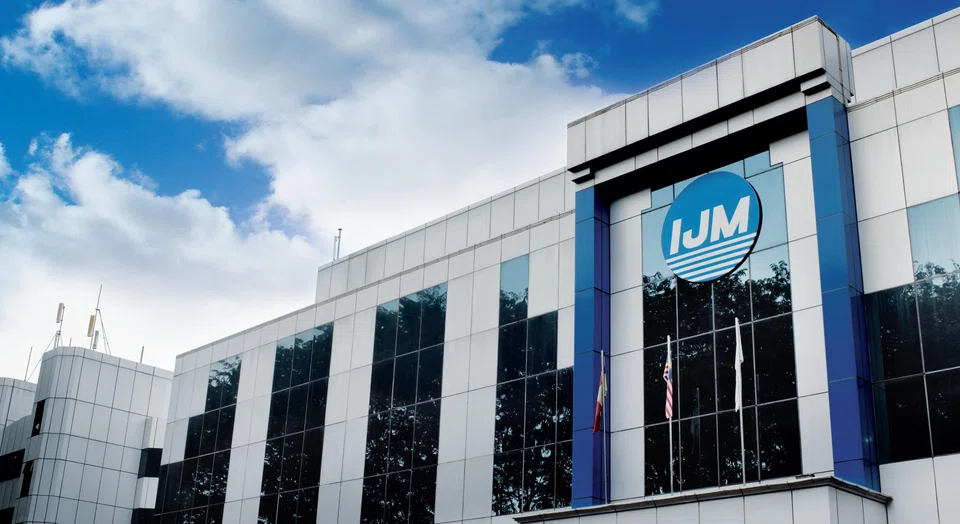
Sources familiar with the MACC investigations into IJM were surprised at the Jan 19 raid, as there seemed to be no clear transactions being looked into.
“The officers had to be educated on the role of a chairman and what board resolutions are. It felt like a fishing exercise,” said one source, who wished to remain anonymous due to the legal constraints around the probe.
On Jan 20, nine individuals including chairman Krishnan Tan recorded their statements at the graft buster’s headquarters. The probe has also seen 55 personal and company accounts frozen, although IJM said fewer than 10 belonged to the firm.
Despite Tan Sri Tan showing his willingness to cooperate thus far, the anti-graft agency proceeded to arrest him at his home on Feb 5, but released him later the same day.
“The company and its United Kingdom associates are not aware of any investigation by the UK’s Serious Fraud Office. We have not been approached and any reports suggesting otherwise are inaccurate,” IJM said in a Jan 20 statement denying allegations of money laundering.
Three days after his arrest, Tan issued a statement outlining how, as non-executive chairman, he is “not involved in the day-to-day operations and management of the company”.
“I have fully cooperated with the authorities and will continue to do so,” he said.
Battle for bumiputera control
The statement by UMNO Youth’s Akmal on Jan 18 – a day after the conclusion of his party’s annual general assembly that was littered with pledges to defend Malay-Muslim rights and unity – sought to frame the takeover in terms of a profitable bumiputera company being swallowed up by a non-bumiputera giant.
“This would undermine national and bumiputera interests, especially considering that the bumiputera stake in Malaysia is already limited,” he said on social media, citing national interest.
Bumiputera is a term used to refer to the Malay majority and native aboriginal tribes as a combined group of original inhabitants of Malaysia, and Malay nationalists often invoke the narrative that they are deprived of their fair share of the economy.
The Malaysian Malay Traders and Businessmen Association also called on Anwar to intervene and prevent a “major and historic policy mistake” that threatens bumiputera interests.
It has since become apparent that the assertion of bumiputera interests was less about blocking Tan Sri Cheah’s Sunway – in which state funds Employees’ Provident Fund (EPF) and Permodalan Nasional Berhad (PNB) also have stakes totalling more than 10 per cent – but to push for a rival bid from a bumiputera-controlled firm.
IJM is widely considered a well-managed firm with a strong portfolio – reaping profits before tax of more than RM4 billion in the past five years – spanning strategic assets such as the Kuantan Port that is set for a boost once the East Coast Rail Link is operational in 2027, and a number of highways besides a stable of construction and property projects.
Hence, bumiputera, or at least state, control of IJM, is seen by Malay nationalists as crucial. Insiders told ST that even as pressure from the MACC deepened, talk that Cheah is roping prominent Malay partners into the deal has grown.
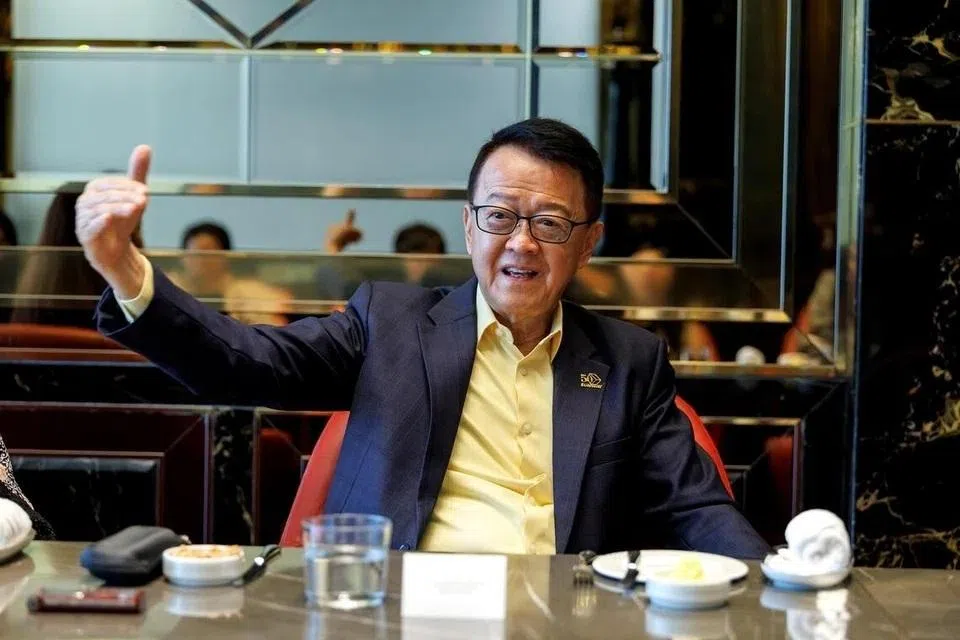
Political and industry sources told ST that various Malay corporate captains have tried to put forward their own proposals. Media reports have already named sovereign wealth fund Khazanah Nasional’s UEM Group as a potential suitor to ostensibly lock in bumiputera control of IJM.
Another name bandied about is YTL Corp. While it is primarily controlled by the family of the late Yeoh Tiong Lay, it has strong ties to bumiputera partners, not least the current King, Sultan Ibrahim Iskandar of Johor.
Within corporate circles, it is an open secret that Malaysian Resources Corporation – whose developments span transport hubs KL Sentral and Penang Sentral, as well as the Eastern Dispersal Link expressway in Johor Bahru – has courted IJM for years.
None of IJM’s top management is bumiputera, and two-thirds of the board are non-bumiputera. References to bumiputera equity by Malay politicians and business groups attacking Sunway’s bid refer to the government-controlled investment arms that owned 45 per cent of IJM at the time the takeover attempt was launched.
EPF was the largest with 18 per cent, followed by PNB owning 13 per cent, Retirement Fund (Incorporated), known as KWAP, having 10 per cent, and another 4 per cent related to the Muslim pilgrimage fund.
Bumiputeras hold just a third of the EPF’s RM1.4 trillion assets under management, while there are non-bumiputera investors in PNB and members of the civil service who benefit from KWAP.
As at Feb 11, the latest significant shareholding changes in IJM have seen EPF grow its ownership to 20.5 per cent, over 2 percentage points more in the month since Sunway’s offer was made. This brings the total holdings under state funds to just shy of half, and breaching that threshold ahead of the April 6 deadline for acceptance of the Sunway offer is absolutely on the cards.
Anwar’s sway in the race
While the prize is IJM, the man who is seen as having the power to decide its fate is none other than PM Anwar, who in his twin role as Finance Minister controls the various state funds with stakes in IJM.
Sunway’s bid was kept low-profile as the conglomerate waited for the right time to move, although the financial sector caught wind of it in the three months ahead of the formal Jan 12 offer.
IJM’s shares traded as high as RM3.10 per unit in August but languished below RM2.30 in December. Sunway, on the other hand, dropped below RM4 per unit in April, but the diversified group has stayed above RM5.50 since early December.
Several observers have also noted that the deal values IJM at close to its net tangible assets (NTA) but Sunway at double its NTA. Sunway formally informed IJM of the offer only on Jan 9, the Friday before it was made public, internal sources told ST, leaving IJM’s management with little space to manoeuvre when the bid was announced on Jan 12, the following Monday.
The characterisation of the deal and graft probe has raised eyebrows across corporate Malaysia. Recent reports alleging abuse of MACC’s wide powers to extort and intimidate corporate figures have only added to these doubts.
“The reports reinforce scepticism over MACC’s independence in general, and especially MACC’s handling of high-profile cases involving Albert Tei, Pamela Ling and IJM – to name but a few,” Singapore Institute of International Affairs’ senior fellow Oh Ei Sun told ST.
He was referring to the disappearance of Ling, the estranged wife of a prominent Sarawakian businessman, just outside the MACC headquarters in April. She remains missing to date.
Meanwhile, whistle-blower businessman Tei – whose video alleges to expose corruption against Sabah’s top politicians and a senior aide to the Prime Minister – has been charged in court after being arrested during a raid on his home by armed men in balaclavas and tactical gear in November.
Whether Anwar’s control means handing IJM over to Malay corporate captains remains to be seen, and is not such a straightforward endeavour. It would require a more handsome sum than Sunway’s RM11 billion to avoid controversy, and few players in the market can pull such a financing package together.
All the intrigue could come to nought. But the reputational harm to one of Malaysia’s top infrastructure and property firms, and indeed the nation’s entire corporate playing field, will not easily be undone. THE STRAITS TIMES
Decoding Asia newsletter: your guide to navigating Asia in a new global order. Sign up here to get Decoding Asia newsletter. Delivered to your inbox. Free.
